What it holds
Black-eyed peas carry ideas of luck, resilience, thrift, and continuity. They also hold a deeper history of African diaspora foodways and the way humble ingredients become symbols of survival and hope.
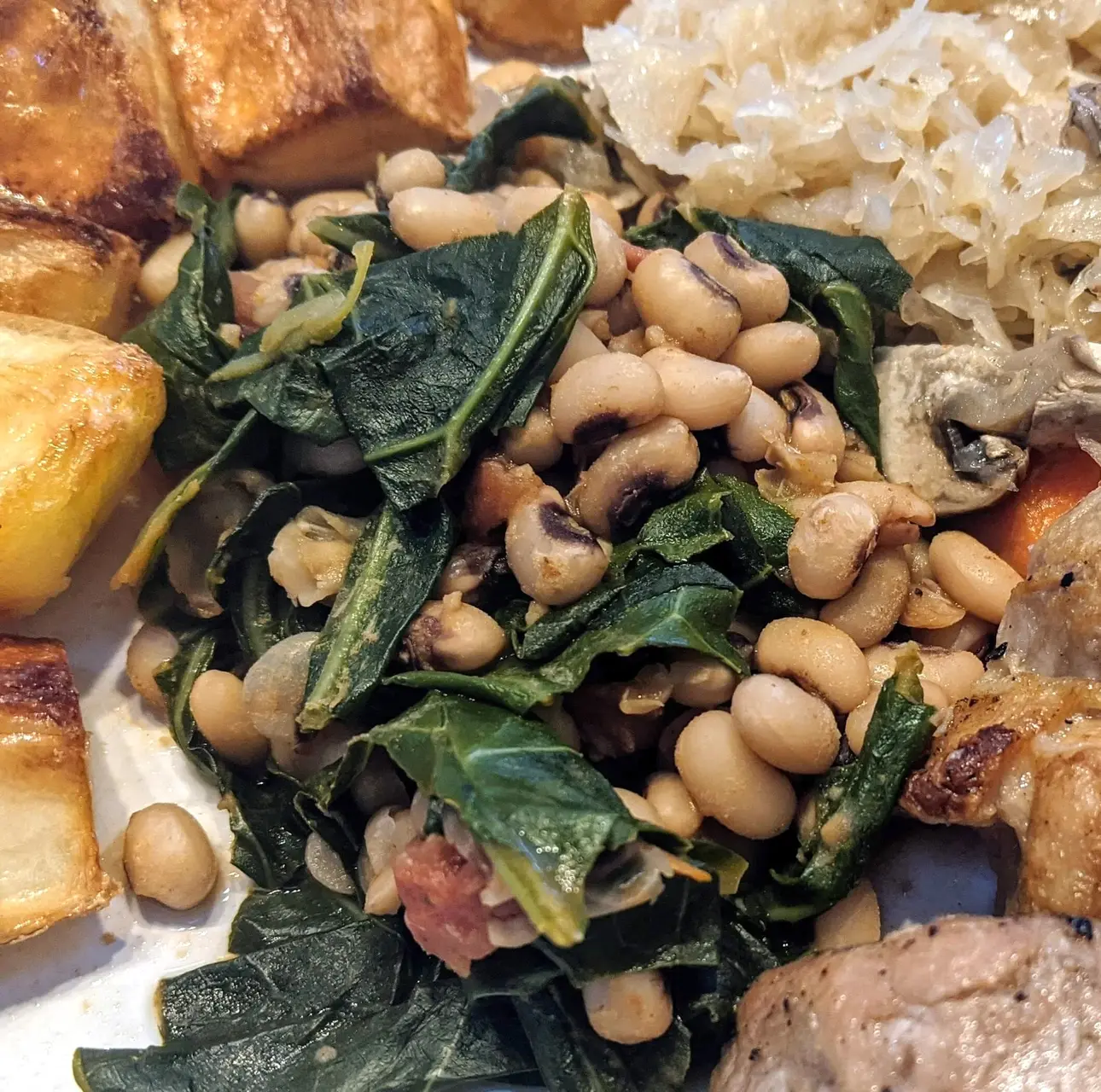
Black-eyed peas are small legumes with a dark center, often simmered until tender and served as a side dish, stew, or part of a larger meal.
Often seen at: New Year's Day
At the table
Shared dish, personal versions
Be the first to preserve how this dish appeared at your table.
What it holds
Black-eyed peas carry ideas of luck, resilience, thrift, and continuity. They also hold a deeper history of African diaspora foodways and the way humble ingredients become symbols of survival and hope.
At the table
They are especially associated with New Year’s meals in the American South, where they are often served with greens and cornbread. They can also appear in everyday cooking as a practical, nourishing dish.
Variations
Variations include Hoppin’ John with rice, smoky versions with pork, vegetarian versions with aromatics, and stewed versions with tomatoes, spices, or greens. Across West African, Southern, Caribbean, and other traditions, black-eyed peas take on many seasonings and forms.
What remains
What remains is a dish that feels modest but meaningful. It continues through annual rituals, family preferences, and the simple comfort of beans simmered slowly.