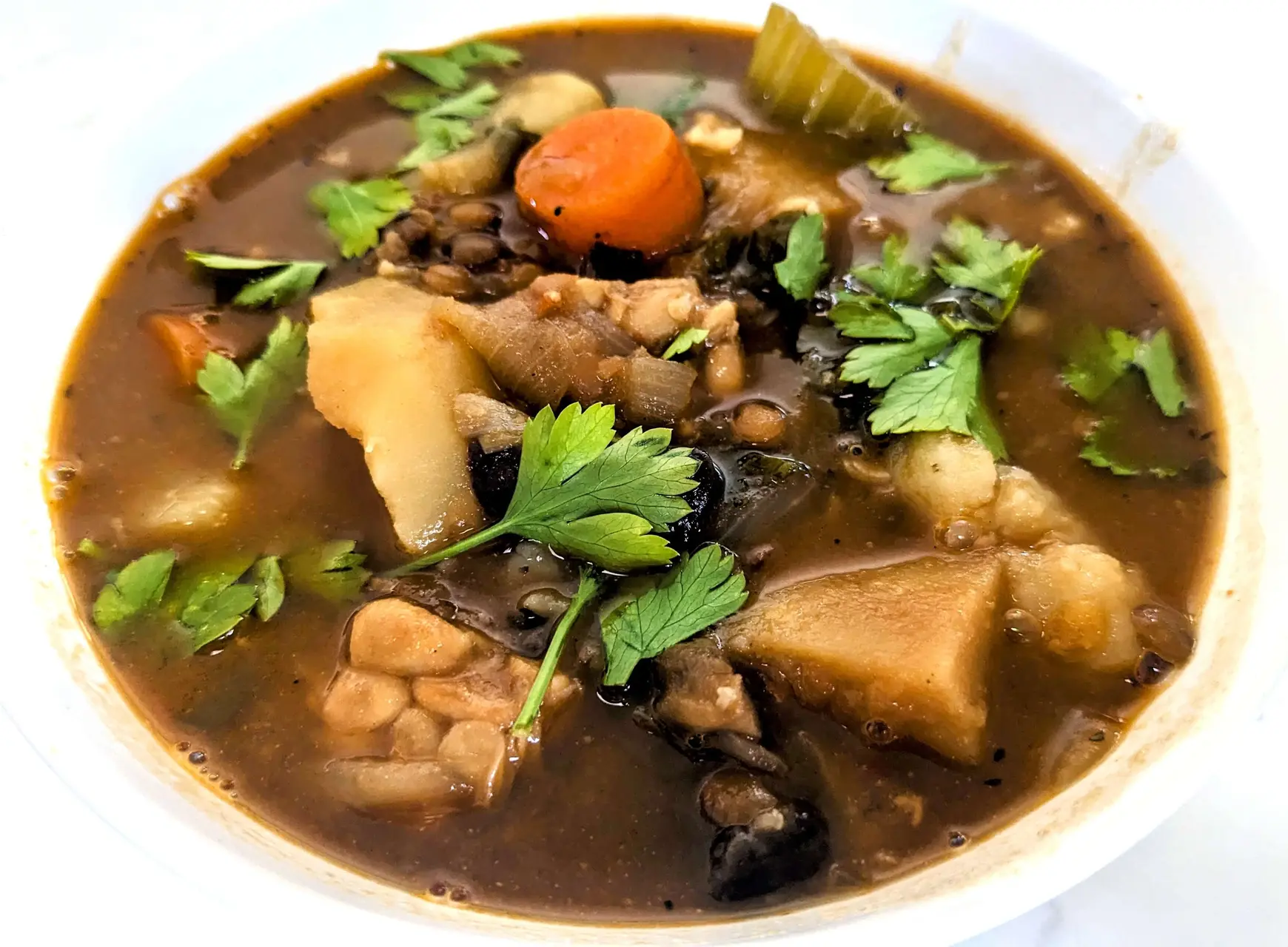
Irish Stew

Irish stew is a traditional stew made with lamb or mutton, potatoes, onions, and simple seasoning, cooked slowly until the meat is tender and the broth becomes rich and comforting.

It belongs to a tradition of practical, sustaining cooking, built from ingredients that could stretch across a household meal. Older versions were often spare, while many modern versions include carrots, leeks, celery, parsley, thyme, or other vegetables.

Although lamb remains the classic version, Irish stew can also be adapted into a vegetarian meal. A version made with tempeh, potatoes, onions, carrots, and a savory broth keeps the spirit of a slow, filling stew while shifting the protein and flavor toward something plant-based.

Often seen at: St. Patrick's Day

Irish Stew main image

At the table

Shared dish, personal versions

Preparations of this dish

No preparations have been shared yet.

Be the first to preserve how this dish appeared at your table.

What it holds

Irish stew carries the meaning of resourceful cooking: simple ingredients given time, heat, and care until they become something sustaining. It reflects a way of cooking where comfort comes from patience rather than complexity.

For families cooking it outside Ireland, the dish can also carry memory, ancestry, adaptation, and the effort to stay connected to a tradition from a distance. A vegetarian version can hold that same intention while making room for the needs and habits of the present table.

At the table

Irish stew often appears in colder months, on family tables, and around St. Patrick’s Day, especially outside Ireland where Irish food traditions are often revisited through holiday cooking. It is a dish meant to warm and sustain rather than impress.

Because it is cooked in one pot and served generously, it carries the feeling of a meal made for sharing. It can be simple enough for an ordinary evening but meaningful enough to mark heritage, season, or remembrance.

Variations

Traditional versions are usually made with lamb or mutton, potatoes, onions, and water or stock. Modern versions may include carrots, leeks, celery, herbs, stout, pearl barley, or a thicker gravy-like broth.

Vegetarian versions may use mushrooms, lentils, beans, root vegetables, or tempeh in place of meat. Tempeh works especially well when browned first and simmered with potatoes, onions, carrots, herbs, and a deeply savory broth.

What remains

Leftover Irish stew often deepens overnight, as the potatoes soften further and the broth settles into the vegetables and protein. What remains is the comfort of a pot that can feed people more than once: practical, warming, and open to both inheritance and adaptation.