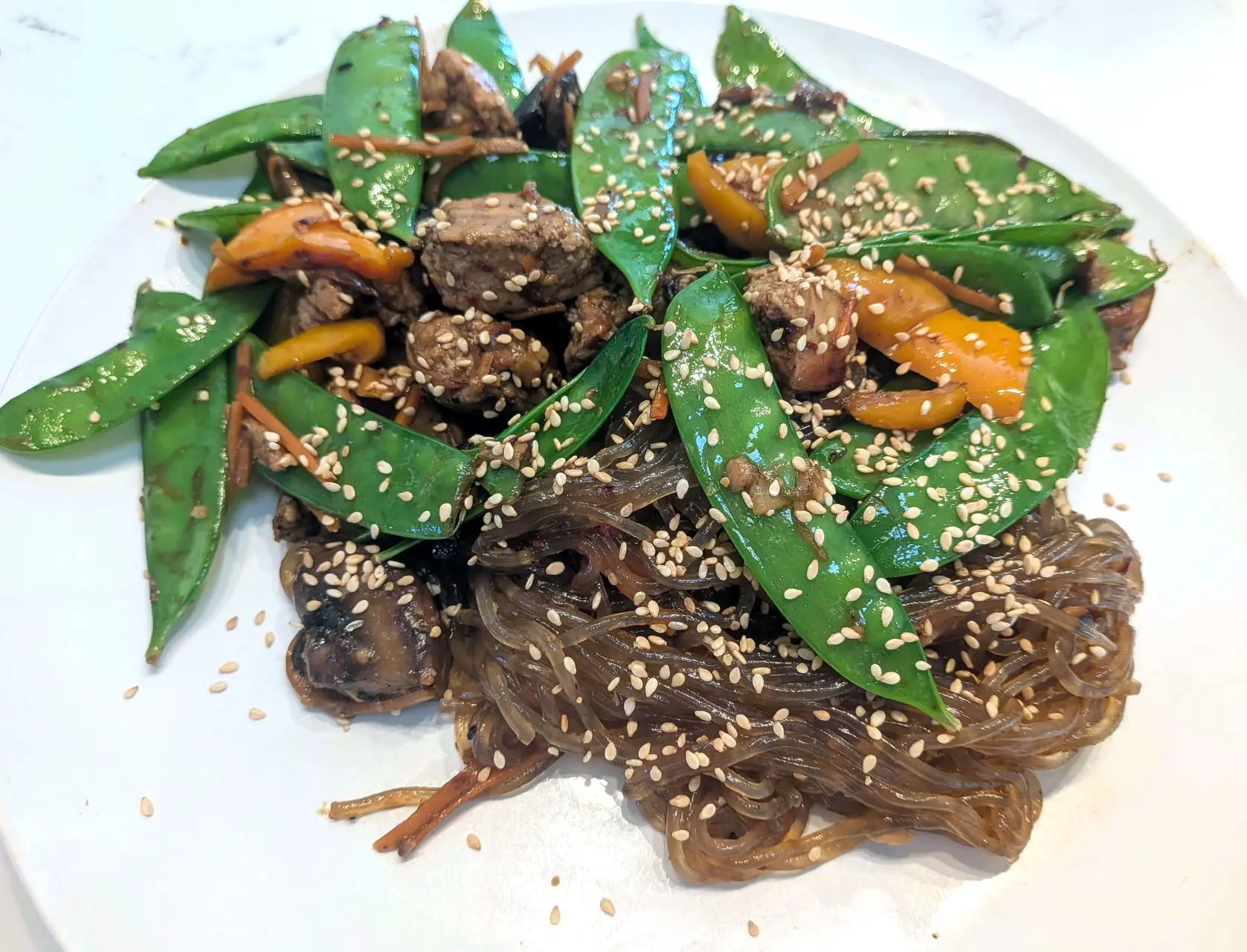
Japchae

Japchae is a Korean noodle dish made with sweet potato starch noodles, vegetables, sesame oil, soy sauce, and often beef, egg, or mushrooms.

The noodles, called dangmyeon, are glossy and springy, giving the dish its distinctive texture. The vegetables are usually cooked separately before being brought together with the noodles, so the final dish holds many colors and textures in one bowl or platter.

Japchae is often associated with celebrations, gatherings, and special meals, but it is also made for everyday eating. Like many dishes that travel through families, the exact vegetables, protein, and balance of sweetness and savoriness can shift from household to household.

Japchae main image

At the table

Shared dish, personal versions

Preparations of this dish

No preparations have been shared yet.

Be the first to preserve how this dish appeared at your table.

What it holds

Japchae carries the care of preparing many parts separately before bringing them together. The dish reflects patience, balance, and attention to texture: chewy noodles, tender vegetables, savory seasoning, and sesame fragrance.

It also carries the feeling of food made for sharing. Its color and abundance make it feel celebratory, while its flexibility keeps it close to everyday home cooking.

At the table

Japchae often appears at Korean holidays, birthdays, parties, and family gatherings, where it can be served as a side dish, shared platter, or part of a larger meal. Its mix of noodles, vegetables, and seasoning makes it feel generous and festive without needing to be overly formal.

Because it is often made in quantity and served at room temperature or warm, it works well as food for a table with many dishes. It is the kind of dish that can sit among other offerings and still feel complete on its own.

Variations

Variations may include beef, pork, egg strips, mushrooms, spinach, carrots, onions, bell peppers, scallions, or other vegetables. Some versions are fully vegetarian, especially when mushrooms are used to bring depth and texture.

The balance of soy sauce, sesame oil, garlic, and sweetness can vary by cook. Some versions are lighter and vegetable-forward, while others are richer, darker, and more deeply seasoned.

What remains

Leftover japchae can be eaten cold, room temperature, or gently reheated, and the noodles continue to absorb the seasoning as they rest. What remains is a dish that holds together many separate pieces, each prepared with care, then gathered into something generous enough for a shared table.