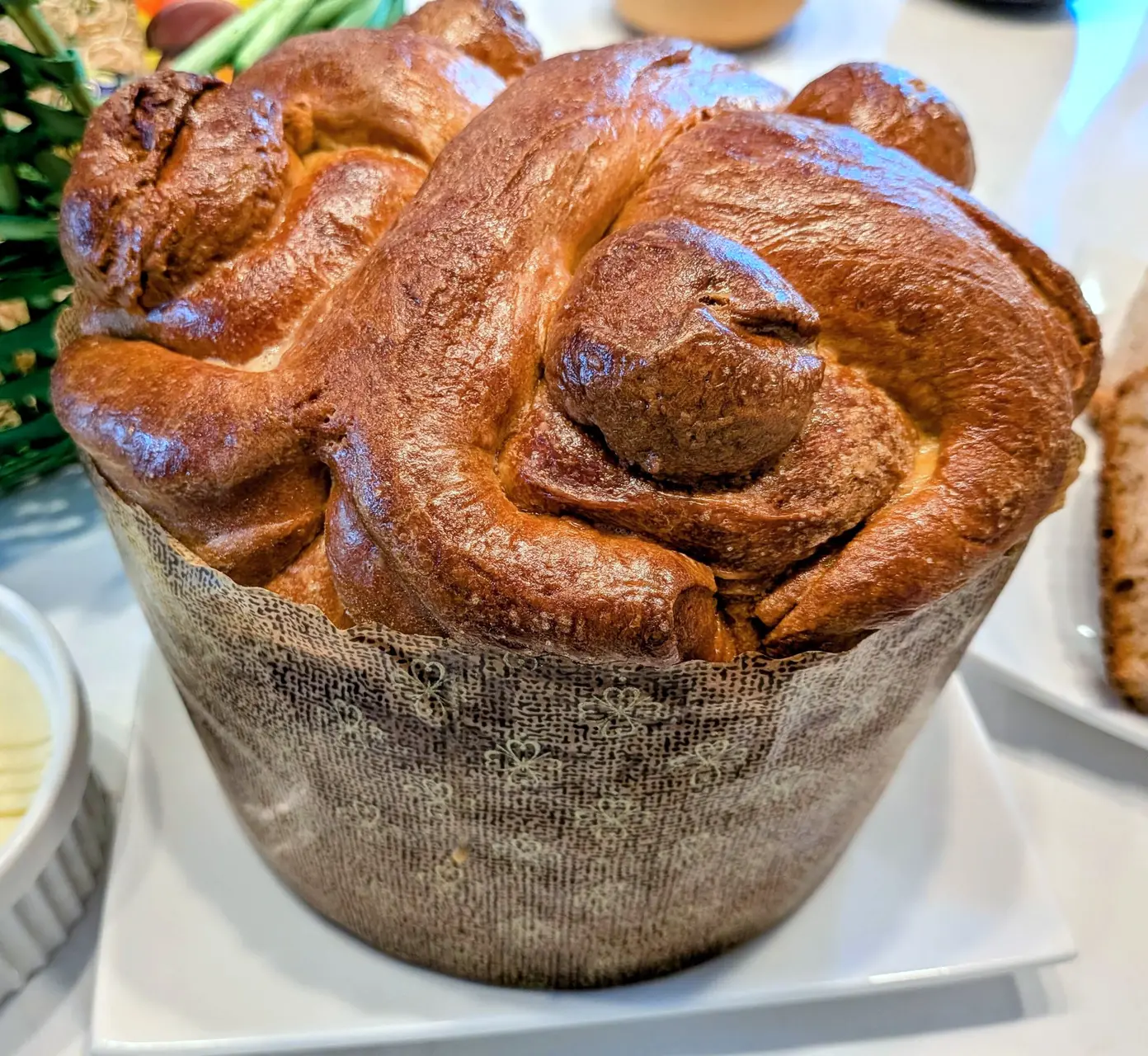
Paska

Paska is a Ukrainian Easter bread, often made as a rich, slightly sweet yeast bread and shaped into a round loaf. It may be decorated with dough braids, crosses, rosettes, or other symbolic designs before baking.

It holds a central place in the Ukrainian Easter basket and Easter table, where it is often brought to be blessed along with foods such as eggs, butter, cheese, salt, horseradish, and sausage. The bread is both food and symbol: a sign of celebration after Lent, renewal, and the return of abundance.

Different families and regions make paska in different ways. Some versions are tall and cylindrical, some are lower and round, some are richly decorated, and some are simpler. The meaning often comes as much from the annual act of making it as from the exact recipe.

Often seen at: Eastern Easter

Paska main image

At the table

Shared dish, personal versions

Preparations of this dish

No preparations have been shared yet.

Be the first to preserve how this dish appeared at your table.

What it holds

Paska carries the meaning of Easter renewal, family continuity, and food prepared with reverence. It reflects a tradition where bread is not only something to eat, but something to bless, share, and remember.

It can also carry the quiet labor of keeping a tradition alive: making the dough, shaping the decorations, arranging the basket, and returning to the same table year after year. Even when the recipe changes, the act of making paska can hold a family close to its inherited rhythms.

At the table

Paska appears at Easter, especially as part of the blessed basket and the Easter morning meal. It is often placed at the center of the table, surrounded by other symbolic foods that mark the end of fasting and the beginning of celebration.

Because it is made only at a specific time of year, paska can carry the feeling of anticipation. The dough, decoration, blessing, slicing, and sharing all become part of the rhythm of Easter.

Variations

Variations may include different levels of sweetness, richness, decoration, and shape. Some recipes use milk, butter, eggs, sugar, and raisins, while others are plainer or more bread-like.

Decorations may be shaped from extra dough and placed on top before baking. Some families make one large loaf, while others make several smaller ones for baskets, gifts, or different tables. Related Easter breads appear across Eastern European traditions, each with its own ingredients, shape, and symbolism.

What remains

Leftover paska continues after the Easter meal, eaten plain, toasted, buttered, or served with other holiday foods. What remains is more than bread: the memory of the basket, the tablecloth, the blessing, the first slice, and the annual return of a tradition that marks the season.