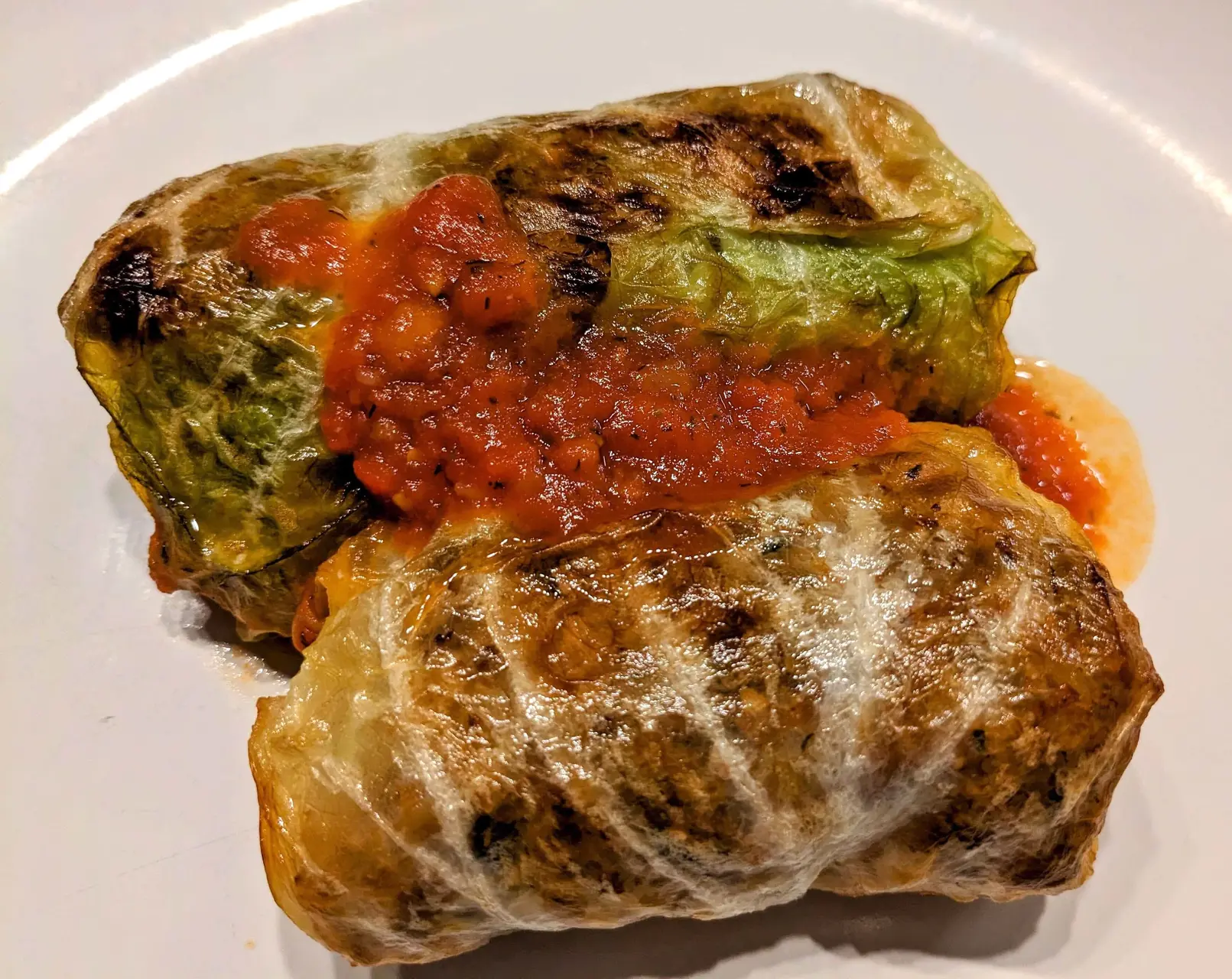
Stuffed Cabbage

Stuffed cabbage is a dish made by wrapping cabbage leaves around a filling, often rice, meat, grains, vegetables, or herbs, then simmering or baking the rolls in sauce or broth.

Often seen at: Eastern Christmas Eve

Stuffed Cabbage main image

At the table

Shared dish, personal versions

Preparations of this dish

No preparations have been shared yet.

Be the first to preserve how this dish appeared at your table.

What it holds

Stuffed cabbage carries the memory of careful handwork: softening the leaves, tucking in the filling, rolling each one, and fitting them together. Because so many cultures have their own version, it can hold both a specific family inheritance and a wider pattern of resourceful cooking. It reflects patience, thrift, and the care of making a filling meal from modest ingredients.

At the table

Stuffed cabbage often appears at family meals, holidays, and gatherings where food is made in quantity and shared from a large pan or pot. It has the feeling of practical abundance: individual rolls formed by hand, layered together, and cooked slowly until tender.

Variations

Variations appear across many cultures, including Ukrainian holubtsi, Polish gołąbki, Jewish stuffed cabbage, Balkan sarma, Greek lahanodolmades, and many other regional versions. Fillings may include rice, buckwheat, ground meat, mushrooms, lentils, or vegetables. Some versions are cooked in tomato sauce, some in broth, some with sauerkraut, and some with sweet-sour flavors.

What remains

Leftover stuffed cabbage often tastes deeper after resting, making it a dish that continues into the next day. What remains is the shape of the tradition itself: leaves wrapped around a filling, a pot shared across generations, and a recipe that changes from household to household while still feeling recognizable.